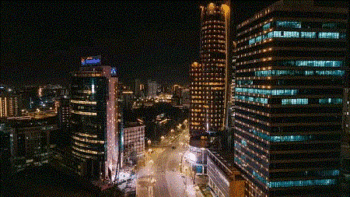
By BEHAK / Travel Blog – Addis Ababa’s Bole district is one of the most dynamic and internationally oriented areas in Ethiopia’s capital. Positioned around Addis Ababa Bole International Airport, Bole functions as both a logistical entry point and a central hub for hospitality, commerce, and social life. For many visitors, it is the first impression of Ethiopia—a district where global connectivity meets local culture.
Spatial Structure and Urban Function
Bole’s growth is inseparable from its proximity to the airport and Addis Ababa’s expanding urban framework. Unlike older districts such as Piazza, which reflect historical layering, Bole embodies modern patterns of development shaped by commerce and international engagement.
The district is organized along major corridors lined with hotels, office buildings, cafes such as London Cafe & Satellite Restaurant, and retail spaces. Traffic congestion, particularly during peak hours, influences movement, but the area’s spatial design supports accessibility. Rather than functioning as a single zone, Bole operates as a network of micro-areas, each contributing to its overall vitality.
Hospitality Infrastructure and Accommodation Patterns
Bole hosts one of Ethiopia’s highest concentrations of hotels, ranging from internationally recognized brands to locally managed guesthouses. This diversity reflects Addis Ababa’s dual role as a diplomatic hub and cultural capital. The presence of global-standard hotels is driven by institutions such as the African Union, which attract diplomats, business travelers, and international organizations.
Locally operated hotels, meanwhile, offer authentic Ethiopian hospitality, providing alternatives that emphasize cultural engagement and personalized service. Visitors can choose accommodation including guest houses such as, Hummer Luxury Guest House, based on purpose—business, leisure, or transit—making Bole a flexible environment for diverse travel needs.
Restaurants, Cafes, and Social Spaces
Food and beverage culture in Bole mirrors Addis Ababa’s cosmopolitan character. Traditional Ethiopian restaurants such as, 2000 Habesha, coexist with venues serving global cuisine, while cafes remain central to social life. Coffee culture is especially prominent, with visitors experiencing both ceremonial traditions and modern espresso bars.
Nightlife is concentrated in Bole, where lounges, such as The Park, restaurants, and entertainment venues such as Bakos create one of the city’s most active evening environments. This concentration of activity makes Bole particularly appealing for short-term visitors seeking accessible leisure options.
Movement and Accessibility
Bole’s accessibility is shaped by its infrastructure. The airport provides direct international entry, while road networks connect the district to other parts of Addis Ababa. Transport options include taxis, ride-hailing services, and private vehicles.
Beyond the district, Ethiopian Airlines positions Addis Ababa as Africa’s aviation hub, linking destinations across the continent and globally. This connectivity reinforces Bole’s role as both a transit point and a destination.
Business Activity and International Presence
Bole is not only a tourism hub but also a center for business and institutional activity. Offices, conference venues, and service providers operate alongside hospitality establishments, creating a mixed-use environment. This integration of business and leisure functions contributes to the district’s dynamic character.
Visitors traveling for professional purposes often interact with the same spaces as leisure travelers, reinforcing Bole’s role as a central node within Addis Ababa’s international networks.
Local Services and Visitor Support
Visitor services in Bole are extensive and structured. Hotels like Ramada Addis provide accommodation across categories, while restaurants and cafes offer diverse dining options. In adition fully furnished luxury apartments like ADORSAM are aso availlable for those considering more comfort and longer stay at the center of Bole.
Tour operators and guides such as, Rotate Ethiopia Tours, facilitate exploration of Addis Ababa and regional destinations such as Lalibela or the Rift Valley.
Car rental services, travel agencies, and translation support are readily available, reflecting Bole’s role as a logistical hub. Small businesses, including souvenir shops and local vendors, contribute to the district’s commercial ecosystem, offering locally produced goods and services.
Intellectual and Cultural Connections
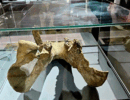
While Bole is primarily associated with hospitality and commerce, it also connects visitors to Ethiopia’s intellectual and cultural institutions. The National Museum of Ethiopia offers insights into human origins and Ethiopian heritage, while Addis Ababa University (aau.edu.et) anchors the city’s academic landscape.
These institutions highlight how Bole serves as a gateway not only to Ethiopia’s travel networks but also to its cultural and intellectual depth.
Interpreting Bole as a Visitor Environment
Bole is often perceived as a district of convenience due to its proximity to the airport and concentration of services. Yet its significance extends beyond practicality. It illustrates how Addis Ababa adapts to international engagement while maintaining local characteristics.
The district functions as a space where global and local systems intersect, shaping both service delivery and visitor experience. For travelers, Bole represents Ethiopia’s evolving identity—modern, connected, yet deeply rooted in tradition.
Concluding Perspective
Bole is a central component of Addis Ababa’s tourism and business landscape. Its structure reflects both the city’s growth and its role within regional and international networks. For visitors, the district offers accessibility, service diversity, and cultural engagement, making it a key point of interaction within Ethiopia’s travel experience.
Ultimately, Bole is not just a gateway—it is a destination in its own right, embodying the convergence of hospitality, commerce, and cultural life in Addis Ababa.
EDITOR’S NOTE: This content is provided by BEHAK Multimedia PLC, a communications and public relations firm in Ethiopia and the publisher of New Business Ethiopia. BEHAK specializes in producing and publishing sponsored content that helps businesses boost visibility, build credibility, strengthen reputation, and support branding efforts. By incorporating carefully researched digital content with hyperlinks to company websites and social media pages, BEHAK enables businesses to promote their services to global potential clients.
Businesses interested in enhancing their digital visibility through such well researched sponsored content are invited to reach out directly to the BEHAK Team.