By BEHAK – Coffee in Ethiopia functions not only as an agricultural product but as a cultural system deeply embedded in daily life. While the country is widely recognized as the birthplace of coffee, this historical association represents only one dimension of its significance. In practice, coffee operates as a social institution, shaping patterns of interaction, hospitality, and community engagement.
Ritual and Social Interaction
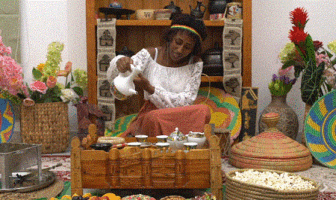
The Ethiopian coffee ceremony provides a structured framework through which these dynamics are expressed. The process involves roasting green coffee beans, grinding them manually, and brewing the coffee in a traditional vessel known as a jebena. Each stage carries symbolic and practical meaning, emphasizing continuity, patience, and attention to detail.
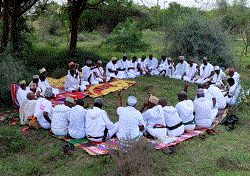
The ceremony is typically conducted in domestic or communal settings, where participants gather to observe and engage in the process. Preparation is deliberate and sequential, often extending over an hour. This structure reflects a broader social function: coffee is not consumed quickly or individually, but shared in a context that encourages conversation and interaction.
For Ethiopians, the ceremony is a daily reaffirmation of community bonds. For visitors, participation offers insight into Ethiopian social practices. It provides a perspective that extends beyond observation, allowing engagement with cultural systems that remain active in contemporary life.
Agricultural Context and Global Position
Ethiopia’s role in the global coffee sector is rooted in its biodiversity and traditional cultivation methods. Coffee is grown in diverse regions, often within small-scale farming systems that differ from large plantation models. This diversity contributes to a wide range of flavor profiles, reflecting variations in altitude, soil composition, and climate.
The country’s coffee production is frequently referenced in international agricultural and economic analyses, including those associated with the World Bank. At the same time, domestic consumption remains significant. Coffee is not only exported but also consumed locally, reinforcing its role within Ethiopian society.

Urban and Contemporary Expressions
In urban centers such as Addis Ababa, coffee culture has evolved to include modern cafés alongside traditional practices. Establishments such as Tomoca Coffee, founded in 1953, represent long-standing institutions within the city, while newer cafés introduce variations in presentation and service.
Despite these developments, the underlying cultural framework remains consistent. Coffee continues to function as a social connector, whether in traditional ceremonies or contemporary settings. The coexistence of old and new illustrates Ethiopia’s ability to adapt cultural practices to modern contexts without losing their essence.
Visitor Experience and Interpretation
For visitors, engaging with Ethiopian coffee culture requires an understanding of its social context. The ceremony is not designed as a performance but as a practice embedded in daily life. Participation often involves observing the preparation process, interacting with hosts, and sharing multiple rounds of coffee.
Traditionally, three rounds are served: abol (first), tona (second), and baraka (third). Each round carries symbolic significance, reflecting stages of engagement within the ceremony. The experience differs from standardized hospitality offerings, as it is shaped by context rather than format. It requires time, attention, and openness to interaction.
Local Services and Visitor Support
Across Ethiopia, coffee culture is integrated into hospitality and tourism services. In cities such as Addis Ababa, cafés, restaurants, and hotels like Yod Abyssinia incorporate coffee ceremonies into their offerings, providing visitors with structured opportunities to engage with the practice.
Local guides and tour operators like Aspire Ethiopia Tour often include coffee experiences within broader itineraries, linking cultural interaction with travel logistics. Small-scale vendors and coffee shops contribute to the local economy, offering both traditional and modern interpretations of coffee consumption.
These service systems enable visitors to access Ethiopian coffee culture while maintaining its connection to local practices and social environments.
Sustainability and Global Relevance
Ethiopian coffee culture also intersects with global conversations about sustainability. Many smallholder farmers rely on traditional, organic cultivation methods, which align with international demand for ethically sourced coffee. Organizations such as Fairtrade International highlight Ethiopia’s role in promoting equitable trade practices.
At the same time, challenges remain. Certification processes are costly, and many small-scale producers lack access to international markets. Efforts to strengthen cooperative structures and improve transparency are ongoing, reinforcing Ethiopia’s position as both a cultural and economic leader in the coffee sector.

Cultural Heritage and Identity
Coffee is more than a beverage in Ethiopia—it is a marker of identity. The ceremony embodies values of hospitality, patience, and respect. It is often accompanied by incense, traditional snacks such as popcorn, and storytelling. These elements reinforce the ceremony’s role as a cultural anchor.
For Ethiopians living abroad, coffee ceremonies serve as a way to maintain cultural ties. Diaspora communities often recreate the ritual, ensuring continuity across generations. This global dimension underscores coffee’s role as a bridge between tradition and modernity, local identity and international recognition.
Comparative Perspectives
While coffee ceremonies exist in other cultures, Ethiopia’s version is distinctive in its depth and symbolism. Unlike quick consumption models prevalent in Western societies, Ethiopian coffee culture emphasizes process and participation. This contrast highlights broader differences in how societies approach hospitality and social interaction.
For visitors, this comparison enriches the experience. It situates Ethiopian practices within a global framework, while emphasizing their unique contributions to cultural diversity.
Concluding Perspective
Ethiopian coffee culture represents a system of interaction rather than a single activity. It reflects the intersection of agriculture, ritual, and social structure, shaping how individuals and communities engage with one another.
For visitors, understanding this system provides a deeper perspective on Ethiopian society, extending beyond the act of drinking coffee to the context in which it is shared. Coffee in Ethiopia is not simply consumed—it is experienced, celebrated, and lived.
EDITOR’S NOTE: This content is provided by BEHAK Multimedia PLC, a communications and public relations firm in Ethiopia and the publisher of New Business Ethiopia. BEHAK specializes in producing and publishing sponsored content that helps businesses boost visibility, build credibility, strengthen reputation, and support branding efforts. By incorporating carefully researched digital content with hyperlinks to company websites and social media pages, BEHAK enables businesses to promote their services to global potential clients.
Businesses interested in enhancing their digital visibility through such well researched sponsored content are invited to reach out directly to the BEHAK Team.