By BEHAK – When travelers step into Ethiopia, they quickly realize that the country is not only defined by its breathtaking landscapes and ancient history but also by the subtle rhythms of everyday life.
To truly connect with Ethiopia, one must look beyond monuments and museums and instead pay attention to the gestures, rituals, and social codes that shape human interaction. Cultural etiquette here is not a rigid checklist—it is a living tradition that reveals how Ethiopians value respect, hospitality, and community.
The Warm Embrace of Hospitality
Hospitality in Ethiopia is legendary. It is not simply about offering a guest food or drink; it is about weaving them into the social fabric. A visitor might be invited into a home where the aroma of freshly roasted coffee fills the air. The coffee ceremony, one of Ethiopia’s most cherished traditions, is more than a beverage ritual. It is a performance of generosity, patience, and connection. Guests watch as beans are roasted, ground, and brewed, often three times, each round deepening the bond between host and visitor.
Food, too, plays a central role in hospitality. Even families with modest means will share what they have, not out of obligation but out of a deep cultural belief that inclusion strengthens relationships. Accepting these offerings is more than politeness—it is a way of honoring the values of the host.
Greetings: The Language of Respect
In Ethiopia, greetings are never rushed. They are moments of recognition, opportunities to affirm respect and friendship. A simple “Selam” conveys peace, while “Dehna neh?” asks about one’s well‑being. These exchanges often extend into longer conversations, reflecting genuine interest rather than perfunctory courtesy.
Physical gestures add another layer. A handshake may be accompanied by a slight bow or a touch on the shoulder. Among close friends, hugs or cheek kisses are common. Elders are greeted with particular reverence, often addressed with titles that acknowledge their status. For visitors, learning to slow down and embrace these rituals of greeting can transform interactions, turning strangers into acquaintances and acquaintances into friends.
Dining as a Shared Experience
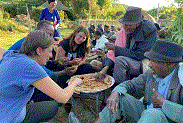
Meals in Ethiopia are not solitary affairs—they are communal celebrations. The national staple, injera, serves as both plate and utensil. Spread across a large platter, it becomes the canvas for stews and vegetables, inviting everyone at the table to share from the same dish. Eating together in this way is a powerful symbol of unity and equality.
One of the most intimate gestures in Ethiopian dining is the gursha, where one person feeds another a bite of food. It is a sign of affection and trust, often exchanged among family members or close companions. For visitors, participating in such traditions requires openness and humility. Washing hands before meals, waiting for the host to begin, and eating with the right hand are all part of the etiquette that signals respect.
Dining in Ethiopia is not just about tasting flavors—it is about entering into a cultural practice that celebrates togetherness.
The Role of Guides and Hosts
For travelers unfamiliar with these customs, local services often act as cultural interpreters. Hotels, restaurants, and tour operators provide more than logistical support; they help visitors navigate social norms. A guide might explain the significance of a coffee ceremony or advise on appropriate behavior in a rural village. These intermediaries bridge gaps in expectation, ensuring that visitors engage respectfully and meaningfully.
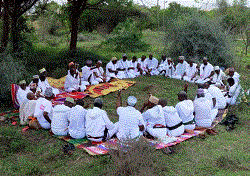
In rural communities, hosts often invite guests to participate in ceremonies, dances, or religious rituals. These experiences are not staged performances but genuine expressions of tradition. By joining in, visitors gain insight into the values that shape Ethiopian life.
Religion and Everyday Etiquette
Religion is deeply woven into Ethiopia’s identity. Orthodox Christianity, Islam, and traditional beliefs coexist, each influencing social behavior. Entering an Orthodox church requires modest dress and often the removal of shoes. Photography may be restricted, and silence is expected. In Muslim communities, respect for prayer times and modest attire is equally important.
Festivals such as Timket, celebrating Epiphany, or Meskel, commemorating the discovery of the True Cross, are vibrant public events. Processions, rituals, and feasts draw communities together, and visitors are welcome to observe. Yet participation demands sensitivity—standing aside during ceremonies, avoiding intrusive photography, and recognizing the sacred nature of the occasion.
Urban and Rural Contrasts
Ethiopia’s etiquette shifts with geography. In Addis Ababa, the capital, interactions may feel more cosmopolitan. English is widely spoken, and international norms often blend with local traditions. Younger generations may adopt casual communication styles influenced by global culture.
In rural areas, however, traditions remain more pronounced. Guests are expected to accept food and drink, participate in communal activities, and show deference to elders. Refusing an invitation can be interpreted as disrespect. For travelers, adapting to these differences is essential. Recognizing that Ethiopia’s diversity extends beyond landscapes into social customs enriches the journey.
Tradition Meets Modernity
Globalization has introduced new dynamics into Ethiopian etiquette. Social media influences fashion and language, while urban youth may embrace more relaxed forms of interaction. Yet traditional values remain resilient. The coffee ceremony continues to thrive, greetings retain their depth, and communal dining remains central.
Visitors navigating this blend of old and new must balance respect for tradition with openness to modern expressions. Doing so allows for authentic engagement with Ethiopia’s evolving cultural landscape.
Practical Wisdom for Travelers
While cultural etiquette in Ethiopia may seem complex, it is guided by simple principles: respect, patience, and openness. Greeting others warmly, accepting hospitality graciously, dressing modestly in sacred spaces, and observing before acting are all ways to honor local customs.
Travelers who embrace these practices discover that etiquette is not a barrier but a pathway. It opens doors to friendships, stories, and experiences that linger long after the journey ends.
Etiquette as Connection
Cultural etiquette in Ethiopia is not about rigid rules—it is about values expressed through everyday actions. Hospitality, greetings, dining, and religious respect all reflect a society that prioritizes community and connection. For visitors, learning these practices transforms travel from observation into participation.
In Ethiopia, etiquette is the language of respect. By listening, observing, and engaging with sincerity, travelers can move beyond being outsiders and instead become part of the shared human experience that defines this remarkable country.
EDITOR’S NOTE: This content is provided by BEHAK Multimedia PLC, a digtal marketing and public relations firm in Ethiopia and the publisher of New Business Ethiopia. BEHAK supports businesses in enhancing visibility, credibility, and reputation while strengthening branding efforts through well researched sponsored content.
Such content may include hyperlinks to a client’s website or social media pages, offering direct access for global potential clients. By incorporating carefully researched digital content with hyperlinks to company websites and social media pages, BEHAK enables businesses to promote their services to global potential clients.
Businesses interested in enhancing their digital visibility through such well researched sponsored content are invited to reach out directly to the BEHAK Team.