BY Mekonnen Teshome – The Accelerated Partnership for Renewables in Africa (APRA) will convene its second Investment Forum in Freetown, Sierra Leone, 22-23 October 2025. APRA, launched at the Africa Climate Summit in September 2023 in Nairobi, Kenya, aiming at accelerating the implementation of energy transitions and promoting green industrialization in Africa, is an African-led alliance of governments, as well as public and private sector stakeholders.
The International Renewable Energy Agency (IRENA), based in Abu Dhabi, UAE, and which is serving as APRA’s secretariat in its statement stated that the renewables investment forum will feature both multi-stakeholder discussions and project matchmaking.
“Additionally, dedicated sessions will explore on-the-ground challenges faced by developers and financiers that hinder creating a bankable project pipeline, expanding capital mobilisation, and utilizing critical minerals for energy transition efforts in APRA nations.”
Currently, APRA’s member countries include Djibouti, Ethiopia, Ghana, Kenya, Mozambique, Namibia, Rwanda, Sierra Leone, Uganda and Zimbabwe. The partnership receives active support from Denmark, Germany, Japan, the United Arab Emirates, and the United States of America, with IRENA serving as its secretariat and a dedicated office under UNOPS established to support implementation.
Operating in lockstep with the Africa Green Industrialization Initiative (AGII), the Accelerated Partnership for Renewables in Africa, targets 300 GW of renewable energy by 2030.
In connection with the signing of a Cooperation Framework in support of AGII towards the mobilisation of over $100 billion to support Africa’s green industrial opportunity in Addis Ababa, Ethiopia last month, Kenyan President William S. Ruto, said: “In only a few short months, we have moved from conversation to concrete collaboration, which we formalise today. United with our financial institutions, our energy systems, our trade corridors, and with partners working in solidarity with us, we can anchor inclusive and globally competitive green value chains.”
Secretary General of the AfCFTA Secretariat Wamkele Mene also at the ocasion said: “We are here today to move from declaration to demonstration, to focus on the political, financial, and institutional levers that will accelerate Africa’s green transformation. We are starting with our own resources. “
Coupled with AGII, APRA is expected to deliverer the clean power and the industrial transformation needed to drive inclusive, sustainable growth.
For that, IRENA has facilitated a high-level and expert sessions that will address investment priorities, enabling frameworks, innovative financing solutions, and the development of supply chains across APRA countries.
Initiating Bankable Renewables-based Projects
To achieve that, African countries are expected to propose and initiate bankable and practical renewables-based projects to realize the energy transition in the investment forum to be held in Freetown, Sierra Leone.
“The sessions will explore on-the-ground challenges faced by developers and financiers that hinder creating a bankable project pipeline, expanding capital mobilisation, and utilising critical minerals for energy transition efforts in APRA nations, “according to IRENA.
To this end, APRA convened a workshop in Ethiopia themed “Unlocking Investment for Renewable Energy in Ethiopia “from August 25-27, 2025 aiming at strengthening the capacities of local stakeholders in the country in structuring renewable energy projects to improve their bankability and access to finance.
The activities are being implemented in close collaboration with the Ministry of Water and Energy, supporting the country’s efforts to expand access, diversifies its energy mix, and attracts private investment. As to IRENA, strengthening the capacity of developers, financial institutions, and policymakers in project finance is essential to scale renewable energy deployment and secure sustainable investment.
Delivered in collaboration with the Ministry of Water and Energy, the workshop focused on leveraging IRENA’s Climate Investment Platform (CIP) and the Energy Transition Accelerator Financing (ETAF) Platform. In addition to technical training, the event served as a platform for project developers and financiers to engage in dialogue around upcoming project opportunities.
APRA’s priority renewable energy projects pitching include on-grid, off-grid, centralized and decentralised distribution, grid infrastructure projects integrated with renewable energy generation, E-Mobility, reen industrialization, renewable energy supply chain development, critical minerals and materials for renewable energy technologies as well as biofuels. Selected projects may be considered for presentation at the next APRA Investment Forum in Sierra Leone.
Expanding Electricity Access beyond Boarders
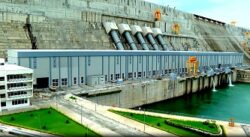
In connection with the completion of the Grand Ethiopian Renaissance Dam (GERD), Ethiopian Water and Energy Minister Habtamu Itefa said that the country is harnessing its renewable resources to position itself as Africa’s energy hub, with plans to extend electricity supply to countries beyond the region.
With the recent inauguration of Africa’s largest hydroelectric dam that generates over 5000 MW, Ethiopia exports electricity to Sudan, Djibouti, and Kenya, with plans to expand interconnections to South Sudan, Tanzania, and other African countries.
According to the Minister, ongoing renewable energy projects, including the Grand Ethiopian Renaissance Dam, are accelerating Ethiopia’s efforts to supply electricity to neighboring countries and beyond.
“Ethiopia is leveraging its renewable energy potential to expand electricity supply and interconnect East African and beyond,” he said.
Currently, APRA’s member countries include Djibouti, Ethiopia, Ghana, Kenya, Mozambique, Namibia, Rwanda, Sierra Leone, Uganda and Zimbabwe. The partnership receives active support from Denmark, Germany, Japan, the United Arab Emirates, and the United States of America, with IRENA serving as its secretariat and a dedicated office under UNOPS established to support implementation.