By Abel Takele – As Addis Ababa gets ready to host global investors for the “Invest in Ethiopia 2026” forum on March 26–27, there is a noticeable sense of cautious optimism among analysts. People who follow economic policy point to the reforms of the past few years most notably the July 2024 foreign exchange changes and the opening of the retail sector as developments that have helped reposition Ethiopia in the eyes of investors.
The Ethiopian Investment Commission itself is aiming for record FDI inflows in 2026, and while targets don’t always tell the whole story, official data showing USD 18.6 billion in investment between 2021 and 2025 has been read by many observers as a sign that interest in Ethiopia has been strengthening despite the global turbulence.
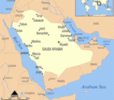
But as Ethiopia works to attract greater investment beyond its borders, investors are placing increased scrutiny on the country’s economic trajectory. In particular, the surge in instability across parts of the Middle East is already reshaping global shipping routes, energy prices, and trade flows—factors that carry significant implications for economies like Ethiopia that rely on imported fuel, fertilizer, and manufactured inputs.
Prime Minister Abiy Ahmed’s recent visit to the United Arab Emirates underscored this reality, as discussions with UAE President His Highness Sheikh Mohamed bin Zayed Al Nahyan and senior leaders centered on how current regional tensions could affect Ethiopia’s economic and security outlook at a moment when domestic reform efforts are gaining momentum.
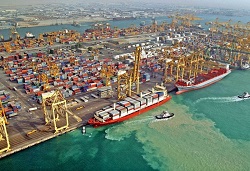
Ethiopia’s economic prospects are increasingly linked to what happens in the Gulf, even as the country maintains a wider network of partners from China and the United States to Saudi Arabia, the EU, and others. The UAE, in particular, has become one of Africa’s more consistent long-term investors over the past decade, with a presence in ports, logistics, aviation, renewable energy, agriculture, tourism, and finance. Unlike the fast-moving capital that enters and exits emerging markets quickly, much of the UAE’s engagement has followed a steadier, partnership driven approach that tends to combine infrastructure with trade and long-term cooperation.
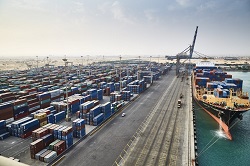
That trend is visible in Ethiopia as well. Over the past five years, the UAE has become more active across several sectors, complementing long standing relationships Ethiopia holds with other global partners. The Berbera Corridor, which has helped support Ethiopia’s push to diversify access to the sea, is often cited as an example of this. It also arrives at a moment when shipping lanes through the Red Sea and Gulf of Aden face recurring uncertainty. For Ethiopia, any disruption to these routes is immediately felt: fuel shipments slow, fertilizer costs rise, and the price of household goods can shift in a matter of weeks.
The risks have grown sharper in recent weeks. According to the Ministry of Foreign Affairs/IFA policy brief “Navigating the Epic Fury: Ethiopia’s Strategic Responses,” the conflict that erupted in late February caused extensive damage to energy infrastructure across the Gulf, Iran, and Israel, while Iran’s announcement of a closure of the Strait of Hormuz sent oil prices surging from $70 to $140 per barrel. For Ethiopia, that spike translates almost directly into a higher monthly fuel bill, tighter foreign exchange conditions, and growing inflationary pressure exactly the kind of stress the government has been trying to manage.
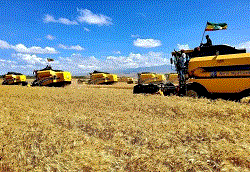
For a land locked and energy dependent country like Ethiopia, these kinds of shocks are not abstract geopolitical events; they are immediate, far reaching economic jolts. Higher fuel prices bleed into transport costs, logistics chains, and eventually the price of basic goods. The impact doesn’t stop there. Ethiopia’s Meher season which produces more than 95 percent of national cereal output depends heavily on imported fertilizer. When supply chains shake or prices jump because of tensions abroad, the cost of food rises at home, affecting households across the country.
While these short-term risks are serious, the long-term implications may be even more significant, particularly for Ethiopia’s digital transformation agenda. Over the past decade, digital capacity and human capital development have become central pillars of national strategy. Ethiopia’s progress in this area relies on global partnerships including those with the UAE, China, the United States, and multilateral institutions which help support the rollout of digital infrastructure, public sector modernization, and skills training.
The UAE has played a meaningful role here as well. Its technology-focused initiatives align closely with Ethiopia’s ambitions in artificial intelligence, digital governance, and workforce development. In a recent exchange with The Afro Times, H.E. Sultan Al Shamsi, UAE Assistant Minister of Foreign Affairs for International Development, highlighted the broader context of this engagement, noting both the scale of the UAE’s commitments to Africa and the intention behind them.
“The initiative aims to support and finance artificial intelligence projects in African countries in order to strengthen digital infrastructure, improve government services, and enhance productivity and quality of life for citizens. This reflects a comprehensive development vision that relies on technology as a fundamental driver of growth and supports the use of technology in social development fields.”
But the MoFA/IFA brief also warns that if instability in the Gulf continues, key partners may be forced to shift attention and resources toward humanitarian or security priorities. That redirection could slow digital development efforts across Africa, including Ethiopia. This is one reason regional stability has moved from being a background issue to a central factor shaping Ethiopia’s future economic and technological direction. The same brief stresses Ethiopia’s need to secure alternative sea access especially with the Strait of Hormuz at risk and calls for steps such as energy diversification and deeper diplomatic engagement within platforms like BRICS+.
Ethiopia’s growing diplomatic role from preparations to host COP32 in 2027 to its involvement in climate and water security discussions depends on global partners remaining focused on cooperation rather than crisis response. And as more than 800 investors and development partners gather for Invest in Ethiopia 2026, the point becomes hard to miss: what happens in the Gulf now has a direct influence on Ethiopia’s economic resilience, its digital ambitions, and its overall investment profile.
In the end, everything happening in the Gulf reminds us that Ethiopia’s future is shaped not only by its own choices, but also by what happens in the wider region it depends on for energy, trade, and investment. When the Gulf is stable, fuel prices settle, shipping routes stay open, and partners can focus on long term development rather than emergency response. That stability creates room for countries like Ethiopia and many others across Africa to keep building stronger economies, expanding digital opportunities, and working toward a more secure future. A peaceful Gulf doesn’t just reduce risk; it strengthens the foundation for the kind of steady, shared development that the continent needs.