By Andualem Sisay Gessesse – Ethiopia continues to offer some of the most compelling investment opportunities in Africa. With a population exceeding 125 million, a young labor force, and ongoing infrastructure expansion, the country is strategically positioned for sustained economic growth.
Over the past decade, Ethiopia has become a hub for industrial parks, financial technology (FinTech), and energy projects, attracting foreign direct investment (FDI) across multiple sectors. Investors who understand the **opportunities first—and the risks second—**can capitalize on high-growth sectors while strategically mitigating potential challenges. This report highlights the most promising sectors, government incentives, and key considerations for investors entering Ethiopia in 2025.
Agriculture: Growth Potential and Environmental, Social, and Governance (ESG) Opportunities
Opportunities:
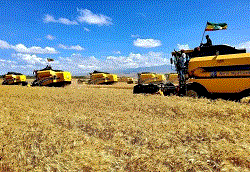
Agriculture remains the backbone of Ethiopia’s economy, contributing significantly to GDP and employment. The sector benefits from fertile lands, favorable climate in many regions, and government-backed programs for climate-resilient agriculture. Investors can tap into export-driven crops such as coffee, horticulture, and pulses.
International partnerships and funding programs aimed at Environmental, Social, and Governance (ESG) compliance are increasing. For example, sustainable land restoration projects and initiatives supporting smallholder farmers create avenues for ESG-aligned investment, attracting international capital and development grants.
Risks:
Climate shocks, including droughts and flooding, pose operational challenges. Supply chain disruptions in Amhara and Oromia can affect production and logistics. Investors must incorporate risk management strategies, such as insurance and diversification across regions and crop types.
________________________________________
📌 Thinking of investing in Ethiopia?
Don’t miss our Free Ethiopia Due Diligence Checklist — practical steps to avoid costly mistakes.
👉 Download the Checklist Here
________________________________________
Manufacturing: Industrial Parks and Incentives
Opportunities:
Ethiopia’s manufacturing sector is growing rapidly, supported by government-led industrial parks and tax incentives. Industrial parks such as Lemi Cement Factory and Dire Dawa Free Trade Zone provide plug-and-play infrastructure, reducing operational risk and setup time.
Government incentives include corporate tax holidays of up to five years, VAT exemptions, and utility packages for priority sectors. The proximity of these industrial parks to major highways, rail corridors, and export hubs enhances logistics efficiency and export potential.
Risks:
Foreign exchange (Forex) shortages, logistics bottlenecks, and security concerns near industrial zones remain challenges. Investors need to partner with local entities and adopt flexible operational strategies to navigate these risks.
Mining and Energy: Strategic Growth Sectors
Opportunities:
Mining and energy are critical to Ethiopia’s economic diversification. The country is rich in minerals such as gold, tantalum, and potash, while renewable energy projects, including the Grand Ethiopian Renaissance Dam (GERD) and Koysha Dam, are expanding energy supply for domestic use and export.
The government encourages private investment in hydropower, solar, and wind energy, offering incentives like long-term leases, tax holidays, and streamlined licensing for compliant investors.
Risks:
Licensing delays, ESG compliance obligations, and regional disputes require careful planning. There is also a risk of sabotage or operational disruption in politically sensitive areas, which investors must account for in their risk assessments.
Tourism: Infrastructure-Driven Expansion
Opportunities:
Ethiopia’s tourism sector is poised for growth with new destinations and infrastructure development. Investments are being attracted to areas near transit hubs, historic sites, and nature-based attractions.
A mega airport construction is on the pipeline at the outskirts of the capital in Bishoftu, Oromia region, enhancing connectivity for both domestic and international visitors.
The expansion of Ethiopian Airlines routes also increases accessibility to emerging tourism destinations. Well-positioned investments near these hubs can achieve high occupancy rates and premium pricing, particularly in hospitality and eco-tourism ventures.
Risks:
Security perception in regions like Tigray, Oromia, Amhara, and Benishangul-Gumuz may limit short-term growth. Investors should consider insurance coverage, local partnerships, and contingency plans to navigate potential disruptions.
Financial & Digital Services: First-Mover Advantage
Opportunities:
Ethiopia’s financial sector is rapidly liberalizing, creating opportunities for financial technology (FinTech) startups, digital banking, and the Ethiopian Securities Exchange (ESX). Early movers can capture market share and benefit from a growing middle-class population eager for modern financial services.
The government has eased regulations in certain areas, offering licenses for mobile money providers and digital banks. Investors adopting ESG-aligned practices in financial services, such as transparent governance and consumer protection, are likely to gain credibility and attract foreign partners.
Risks:
Operational complexity due to regulatory requirements, currency volatility, and high inflation can pose challenges. Investors need robust financial planning and local partnerships to navigate these risks effectively.
________________________________________
📌 Thinking of investing in Ethiopia?
Don’t miss our Free Ethiopia Due Diligence Checklist — practical steps to avoid costly mistakes.
👉 Download the Checklist Here
________________________________________
Government Incentives and Macro-Economic Context
Ethiopia offers a combination of fiscal and operational incentives across sectors:
• Corporate tax holidays: 5–10 years for priority sectors like manufacturing, energy, and tourism.
• Utility packages: Preferential electricity and water tariffs for industrial parks.
• Export support: Duty exemptions on imported capital goods.
Macro-economic trends indicate GDP growth of 6.5–7.2% in 2025 and continued FDI inflows, particularly in manufacturing, energy, and agriculture. Infrastructure projects, including roads, rail corridors, and energy expansion, improve logistics efficiency and long-term operational viability.
Conclusion
Ethiopia’s investment landscape in 2025 offers high-growth opportunities across multiple sectors. Agriculture, manufacturing, mining, energy, tourism, and financial services provide strong ROI potential, particularly for investors who prioritize ESG compliance and strategic partnerships.
While risks remain—including regional security, regulatory complexity, and currency volatility—investors who adopt structured due diligence, contingency planning, and local collaborations can navigate these challenges and capture sustainable returns.
________________________________________
✅ Before you sign any deal in Ethiopia, do your homework.
Our Free Ethiopia Due Diligence Checklist helps you verify partners, land, licenses, and compliance.
📩 Get it here → Download the Checklist Now
________________________________________
EDITOR’S NOTE: the Author, Andualem Sisay Gessesse is a seasoned corporate due diligence expert and investigative journalist based in Ethiopia. As the Founder and Lead Investigator of NewBusinessEthiopia.com, he combines rigorous investigative techniques with deep local knowledge to provide businesses and investors with reliable intelligence that protects their investments and uncovers hidden risks across Ethiopia and Africa.

With over 15 years of experience working with multinational corporations, governments, and financial institutions, Andualem is recognized as a leading authority on corporate risk and due diligence in Ethiopia. His unique approach—“Investigative Due Diligence Backed by Real Journalism”—ensures clients receive actionable insights grounded in facts, verified on the ground. Connect with Andualem on LinkedIn to learn more about how his team helps investors navigate Ethiopia’s complex business landscape.