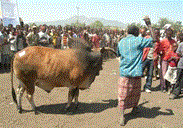
Harari Regional Agriculture Development Bureau has announced that significant economic results are being achieved through the support provided to investors involved in livestock production.
In the Harari Region of Ethiopia, efforts are being carried out not only to create favorable conditions for private investors and developers to become successful in their respective sectors, but also to provide support that enables them to create employment opportunities for many citizens and strengthen their economic capacity.
Mr. Admasu Mersa is a livestock investor engaged in cattle farming in the Harari Region. In his remarks, he said that through hard work and strong commitment, he started with only four cattle and, by turning his plans into action, has now increased his livestock to 72 cattle.
He stated that through his livestock farming activities, he supplies more than 300 liters of milk per day to the market, earning more than 45,000 birr in daily income, while also creating employment opportunities for 15 citizens.
He further explained that he is working to increase his wealth and expand his business in the future, and requested that the necessary support continue to be strengthened.
The Director of Livestock and Fishery Development at the Harari Regional Agriculture Development Bureau, Mr. Naol Abdumalik, said that, in order to achieve the region’s economic growth plan, the bureau is not only creating favorable conditions for investors engaged in livestock production but is also providing close, coordinated, and professional follow-up support.
He explained that these efforts have enabled investors to become successful, generate more than 10 million birr in income, and make a significant contribution to the regional economy.
The Livestock and Fishery Development Team Coordinator at the bureau, Mr. Mulugeta Adugna, added that the success has been achieved through the breeding of improved foreign cattle breeds using artificial insemination methods, along with continuous vaccination, veterinary medicine, and professional monitoring of animal health and management practices.