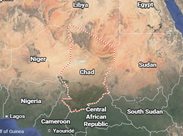
Chad rarely features at the center of global investment conversations, yet for a growing number of investors, contractors, and development partners, it has quietly become one of the most consequential operating environments in Central Africa.
As the country moves toward 2026, Chad presents a paradox that many external actors struggle to read correctly. At the national level, political continuity appears relatively stable following the 2024 presidential election. Security partnerships remain intact, oil production continues, and the government is promoting ambitious development plans under long-term national strategies.
But beneath this surface stability lies a far more complex operating reality.
In practice, Chad is not a market where success or failure is determined by headline indicators, election results, or formal approvals alone. Outcomes are shaped by where a project operates, who it partners with, how security geography is navigated, and when fiscal and enforcement pressures emerge. Investors who treat Chad as a uniform national market often discover this too late.
Security conditions vary sharply by corridor and region. Fiscal stress influences enforcement behavior in unpredictable ways. Foreign-exchange access is governed less by written rules than by timing, liquidity cycles, and bank capacity. Land access frequently depends on community consent and local authority dynamics rather than legal title alone. Reputational and ESG exposure can escalate rapidly through association, even when formal compliance boxes are checked.
These realities are not unique to Chad—but in Chad, they are unforgiving of shortcuts.
Africa Risk Control’s latest report, “Chad 2026: Top 10 Due Diligence & Risk Advisories Decision-Makers Need,” distills these dynamics into ten practical risk advisories drawn from field intelligence and real execution failures. Rather than listing generic political or economic risks, the report focuses on how projects actually derail—and what disciplined operators do differently.
For investors, NGOs, DFIs, and international firms assessing entry, expansion, or funding decisions, understanding Chad’s operating environment in 2026 is not optional. The cost of misreading risk is measured not only in financial loss, but in stalled projects, damaged relationships, and reputational exposure. You may get Chad full report at ARC store and also book a one hour intelligence briefing with lead country researcher for Chad here.
Africa Risk Control is launched in mid 2025 by a group of award winning business & investigative journalist and due diligence experts in Africa to help global investors, corporations, and institutions make confident decisions in Africa’s dynamic markets.