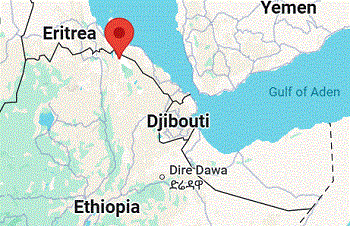
By BEHAK / Travel Blog – The Danakil Depression represents one of the most geologically distinctive regions in Ethiopia, and indeed globally. Located in the Afar Triangle, the area is defined by tectonic activity, geothermal processes, and extreme climatic conditions that shape both the environment and the structure of travel within it.
Unlike destinations where visitor experience is organized around built infrastructure or cultural landmarks, the Danakil Depression is shaped primarily by natural systems. Its landscape is the result of ongoing geological processes, including the divergence of tectonic plates, which continue to influence the region’s physical formation.
Geological Formation and Environmental Conditions
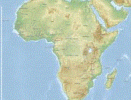
The Danakil Depression lies below sea level, making it one of the lowest points on the African continent. Temperatures in the region regularly exceed 40°C, creating an environment that is among the hottest inhabited areas in the world.
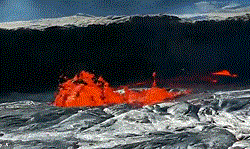
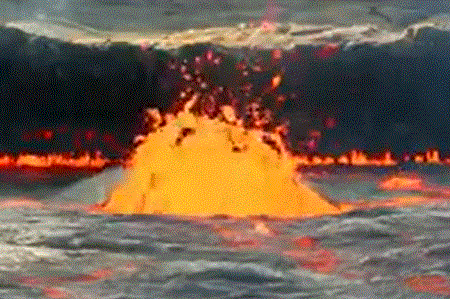
Geothermal features, including sulfur springs, salt flats, and volcanic formations, define the visual and physical character of the landscape. The Erta Ale volcano, known for its persistent lava lake, is documented extensively by the Smithsonian’s Global Volcanism Program, which tracks its continuous eruptive activity and scientific significance.
Environmental assessments and geological studies referenced by institutions such as the World Bank highlight Ethiopia’s geological diversity, with the Danakil Depression representing an extreme example. Recent academic work emphasizes its geoheritage value, noting that the Dallol geothermal system is a world‑class example of active rifting and the birth of a new ocean.
Movement and Structured Access
Travel within the Danakil Depression is fundamentally different from other regions in Ethiopia. Independent movement is generally not feasible due to environmental conditions, remoteness, and logistical complexity.
Instead, access is structured through organized expeditions that include transport, guides, security arrangements, and logistical support such as water and supplies. This structured approach is not simply a matter of convenience but a necessity shaped by the environment.
Cultural and Economic Context
Despite its extreme conditions, the Danakil region is inhabited, primarily by Afar communities whose livelihoods are closely linked to the environment. Salt extraction plays a central role in local economic activity.
Salt caravans, transporting blocks of salt across the desert, remain a visible feature of the landscape. Anthropological research highlights how these caravans have shaped trade and cultural identity for centuries, even as trucks increasingly replace camels (Journal of Anthropological Films).
Local Services and Visitor Support
Access to the Danakil Depression is supported by specialized service providers. Tour operators coordinate expeditions, while local guides provide navigation and contextual understanding. Vehicle providers, often using modified off‑road transport, are essential for movement across difficult terrain. Additional support services, including food preparation and camp setup, are typically integrated into organized travel arrangements.
Access and Connectivity
Travel to the Danakil Depression generally begins in Addis Ababa, followed by domestic flights or overland routes to entry points such as Mekelle. Ethiopian Airlines supports domestic connectivity, linking major urban centers to expedition hubs. From these entry points, expeditions manage onward movement into the Danakil region.
Concluding Perspective
The Danakil Depression represents a form of travel defined by environmental extremes and structured access. Its significance lies not only in its visual landscape but in the geological and human systems that shape it. For visitors, the region offers an experience fundamentally different from other destinations in Ethiopia, emphasizing coordination, adaptation, and engagement with environmental conditions.
Beyond its tourism appeal, the Danakil Depression is also a living laboratory for scientists studying tectonic divergence, geothermal chemistry, and microbial life in extreme environments. These studies have implications for understanding planetary science, including analogs for Mars and other celestial bodies.
At the same time, the resilience of Afar communities demonstrates how human systems adapt to some of the harshest conditions on Earth. Together, these elements make the Danakil Depression not only a destination of adventure but also a site of global scientific and cultural importance.
EDITOR’S NOTE: This content is provided by BEHAK Multimedia PLC, a communications and public relations firm in Ethiopia and the publisher of New Business Ethiopia. BEHAK supports businesses in enhancing visibility, credibility, and reputation while strengthening branding efforts through well researched sponsored content.
Such content may include hyperlinks to a client’s website or social media pages, offering direct access for global potential clients. By incorporating carefully researched digital content with hyperlinks to company websites and social media pages, BEHAK enables businesses to promote their services to global potential clients.
Businesses interested in enhancing their digital visibility through such well researched sponsored content are invited to reach out directly to the BEHAK Team.