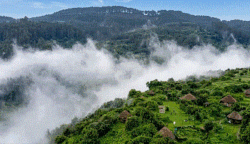
By BEHAK / BLOG – The Simien Mountains represent one of Ethiopia’s most distinctive environmental systems, defined by elevation, geological formation, and ecological diversity. Located in the northern highlands, the range forms part of a broader plateau that has been shaped over time by volcanic activity and erosion, resulting in steep escarpments, deep valleys, and high-altitude ridges.
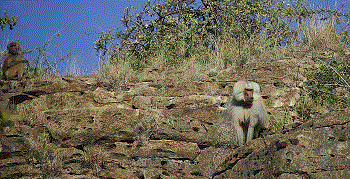
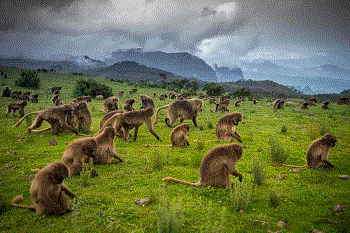
As a designated UNESCO World Heritage Site, Simien Mountains National Park is recognized not only for its visual landscape but also for its ecological significance. The park supports several endemic species, including the Gelada monkey and the Walia ibex, both of which are closely associated with high-altitude environments.
International recognition by UNESCO reflects the global importance of the Simien ecosystem, particularly in relation to conservation and biodiversity.
Geological Formation and Landscape Structure
The landscape of the Simien Mountains is often described in terms of scale and verticality. Cliffs extend for hundreds of meters, while plateaus provide access points for movement across the range. This structure is the result of long-term geological processes, including volcanic activity followed by erosion.
The visual character of the region is influenced by altitude and atmospheric conditions. Clear days provide expansive views across valleys and ridges, while cloud cover can alter visibility, creating a shifting landscape that changes throughout the day.
Environmental studies, including those referenced by the World Bank, highlight Ethiopia’s highland ecosystems as important for both biodiversity and sustainable tourism development.
Biodiversity and Endemic Species
The Simien Mountains are notable for their concentration of endemic wildlife. The Gelada monkey, often observed in large groups across the highland grasslands, represents one of the most visible species in the region. Its behavior and habitat are closely linked to the ecological conditions of the plateau.
The Walia ibex, by contrast, occupies more rugged terrain along cliffs and steep slopes. Its presence reflects the adaptability of species to high-altitude environments and contributes to the conservation significance of the park.
Bird species, including various raptors, further add to the ecological diversity of the region. For visitors, wildlife observation forms an integral part of the experience, though it is typically secondary to the broader landscape context.
Trekking and Movement
Travel within the Simien Mountains is structured primarily around trekking. Unlike urban or site-based destinations, movement through the park involves navigating terrain that is shaped by natural features rather than built infrastructure.
Trekking routes vary in length and difficulty, ranging from shorter excursions to multi-day journeys. These routes are typically supported by local guides, scouts, and logistical teams, reflecting both safety requirements and conservation policies.
Altitude plays a significant role in shaping the trekking experience. Visitors may require time to adjust to elevation, particularly when moving across higher sections of the range. Weather conditions can also influence route accessibility and visibility.
Local Services and Visitor Support
In areas surrounding Simien Mountains National Park, visitor services are closely aligned with the structure of trekking activity. Accommodation is generally provided through lodges and community-based facilities located near entry points and along established routes.
Local guides and scouts play a central role in facilitating movement within the park, while tour operators coordinate permits, equipment, and logistical support. Transport providers offer access to and from trekking starting points, often linking the region to nearby urban centers.
Small-scale businesses, including local vendors and service providers, contribute to the visitor economy while remaining integrated within the broader community structure. This localized system reflects the way tourism operates within the Simien region, where environmental and social factors shape service availability.
Access and Connectivity
Access to the Simien Mountains is typically organized through a combination of road travel and domestic flights. The nearest major urban center is Gondar, which serves as a logistical base for visitors entering the park.
Domestic connectivity is supported by Ethiopian Airlines, enabling more efficient movement between regions. From Gondar, overland travel provides access to park entry points.
Concluding Perspective
The Simien Mountains illustrate how landscape, ecology, and movement interact to shape travel experience. The region is defined not only by its visual characteristics but also by the systems that support access and conservation.
For visitors, the Simien Mountains offer an environment that is structured around exploration rather than observation, requiring engagement with both terrain and context.
EDITOR’S NOTE: This content is provided by BEHAK Multimedia PLC, a communications and public relations firm in Ethiopia and the publisher of New Business Ethiopia. BEHAK supports businesses in enhancing visibility, credibility, and reputation while strengthening branding efforts through well researched sponsored content.
Such content may include hyperlinks to a client’s website or social media pages, offering direct access for global potential clients. By incorporating carefully researched digital content with hyperlinks to company websites and social media pages, BEHAK enables businesses to promote their services to global potential clients.
Businesses interested in enhancing their digital visibility through such well researched sponsored content are invited to reach out directly to the BEHAK Team.