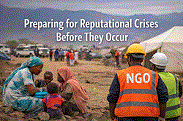
By BEHAK – Non-governmental organizations operate in environments defined by complexity, scrutiny, and high expectations. Across Africa, NGOs deliver essential services in healthcare, education, humanitarian relief, climate resilience, and governance. Yet despite their critical role, many organizations remain vulnerable to reputational crises that emerge suddenly and escalate rapidly.
These crises rarely originate from program failure alone. They often arise from misunderstandings, misinformation, political tensions, or incomplete public narratives about an organization’s work. When such moments occur, NGOs that have not prepared communication strategies in advance can experience significant operational disruption.
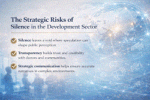
Reputational crises in the development sector tend to follow predictable patterns. A program controversy, an allegation of mismanagement, or a misinterpreted statement may circulate through social media before an organization has time to respond. Stakeholders—including donors, regulators, community leaders, and partners—seek clarity immediately. Silence or delayed communication can quickly create an information vacuum filled by speculation.
Preparation therefore becomes essential. Crisis communication planning allows NGOs to define response protocols before emergencies arise. This includes identifying spokespersons, establishing verification procedures, and clarifying messaging frameworks that reinforce transparency without compromising operational integrity.
Another critical component is institutional credibility built over time. NGOs that maintain consistent public communication through credible media engagement and professional discourse are better positioned to withstand crises. Their work is already understood within public narratives, making sudden allegations less likely to define their identity.
Donors and institutional partners increasingly evaluate how organizations manage reputational risk. Crisis preparedness signals governance maturity and operational resilience. It reassures partners that an NGO can address unexpected scrutiny while maintaining accountability.
For NGOs operating in complex environments, communication strategy is therefore not simply about visibility. It is part of institutional safeguarding. Organizations that invest in reputational resilience before crises occur are far better positioned to protect their missions when challenges inevitably arise.
EDITOR”S NOTE: BEHAK, an Africa-based strategic communications and media advisory firm headquartered in Addis Ababa, works with NGOs, development agencies, and mission-driven enterprises to strengthen credible media visibility across African and international platforms.
Through structured media engagement, narrative development, leadership profiling, and policy-focused communication strategy, BEHAK enables organizations to translate complex field operations into clear, defensible public narratives. Its approach prioritizes accuracy, institutional maturity, and long-term reputation management — ensuring that impactful climate and humanitarian work receives the visibility and recognition it merits within competitive funding and policy environments.