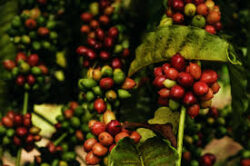
By Dieudonné Bukuru / Bujumbura, Burundi – Renowned for its finesse and exceptional aroma, Burundian coffee is one of the pillars of the national economy. It represents more than a quarter of export revenues and directly or indirectly supports nearly 8 million Burundians.
In a country where more than 98% of activities are based on agriculture, coffee cultivation is much more than a profession: it is a tradition and a symbol of identity.
An exceptional coffee recognized internationally
Although Burundi only contributes about 0.3% of global coffee exports, its quality is internationally acclaimed. Despite its small share of the global total, Burundian coffee is internationally recognized as a specialty coffee, appreciated for its quality.
Grown between 1,500 and 2,000 meters above sea level, in a humid equatorial climate, Burundian Arabica coffee offers a unique flavor profile: fruity notes, lively acidity, and a refined sweetness. These characteristics have earned it the title of specialty coffee on the international market.
Burundian coffee growers favor artisanal production: each plant is transplanted by hand, with few chemical fertilizers or pesticides. This ecological approach promotes the production of a naturally rich and authentic coffee.
Burundi in the exclusive circle of excellence
Since 2012, Burundi has participated in the Cup of Excellence, the most prestigious global competition dedicated to specialty coffee. Samples are tasted blind by an international jury, and only coffees scoring more than 86 points out of 100 are eligible for awards. And Burundi ranks highly.
The country regularly excels: in 2017, a batch from the Kibingo washing station (Kayanza province) in Burundi achieved first place worldwide, selling at auction for $115 per kilo, a historic achievement. In 2022, Burundi was also recognized at the Specialty Coffee Expo in Boston, USA, as the leading producer of the highest-quality coffee, where producers from 400 countries competed. On February 22, 2025, the G25 African Coffee Development Summit led Burundi to the presidency of the IACO, projecting that by 2035, 50% of coffee production in Africa will be roasted and marketed beyond the continent’s borders.
Risk Analysis for Foreign Investors:
To invest in the Burundian coffee sector, foreign investors must consider the following risks:
– Economic and Structural Risks
• Production volatility: 50% drop between 2020 and 2022 due to production cycles, climatic hazards, and coffee plant diseases.
• Poor infrastructure: Some rural roads in poor condition, difficult access to washing stations.
• Regulatory and Institutional Risks: Evolving regulatory framework.
– Social and Environmental Risks
• Small average farm size, making mechanization and standardization difficult.
• Producers’ vulnerability to global price fluctuations.
• Deforestation and soil depletion in some producing regions.
• Impact of climate change: irregular rainfall, deterioration in cherry quality.
– Commercial Risks
• Lack of traceability and marketing, facilitating the resale of Burundian coffee under other regional labels.
• Lack of a strong national brand strategy to compete
• Difficulties in accessing local financing for producers and processors.
Mitigating Factors and Recommendations
Some mitigating factors can be considered to reverse this situation:
– Strategic Approach for Foreign Investors
1. Partner with local cooperatives to ensure project transparency, traceability, and sustainability.
2. Invest in local processing (washing stations, roasting) to capture more added value before export.
3. Strengthen logistics through public-private partnerships (roads, warehouses, transportation).
4. Support certification (Fairtrade, Rainforest Alliance, Organic, etc.) to ensure access to premium markets.
5. Implement climate risk coverage and product diversification (honey, fruit, complementary crops).
Favorable Institutional Environment
• Government support: commitment to modernizing the sector and attracting foreign direct investment.
• Existence of national initiatives (Burundi Better Coffee Initiative) to improve quality and productivity.
• International partnerships (European Union, World Bank, USAID) for training and financing cooperatives.
A promising sector
In conclusion, the Burundian coffee sector offers significant potential for foreign investors attracted by specialty coffee and sustainable products.
However, the success of any investment depends on a collaborative approach, sound management of logistical and climate risks, and a long-term vision focused on quality, sustainability, and social impact.