
By Africa Risk Control (ARC) – Chaired by the Government of the United Arab Emirates (UAE) representative, the Arab League announced its rejection of the recognition of Somaliland by Israel as an independent state.
Many countries including Egypt, Turkey, Djibouti, Saudi Arabia, Eritrea, Qatar, and organizations such as the African Union have been rejecting Israel’s recognition of Somaliland as independent country. The Council of the League of Arab States held an extraordinary session today, chaired by UAE Ambassador Hamad Obaid Al Zaabi, condemn Israel’s recognition of Somaliland and to show solidarity with Somalia over threats to its sovereignty and territorial integrity.
🚨The UAE🇦🇪 representative to the Arab League condemns Israel’s recognition of Somaliland and affirms support for Somalia’s sovereignty and territorial integrity. I didn’t expect this — how do you view the UAE’s stance?” pic.twitter.com/KrNugUtqTl
— HM🫰 (@fm117d) December 28, 2025
“Somaliland is an integral part of the Federal Republic of Somalia, in accordance with the Charter of the League of Arab States and the Charter of the United Nations. The Council also affirmed that the illegal Israeli recognition constitutes an attack on Arab national security and an attempt to undermine regional and international security and peace.”
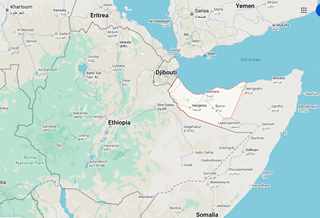
Somaliland, which has been a separate state for the last three decades, has been working hard to get recognition. And about a year ago, Somaliland and Ethiopia have signed an MOU, which enables Ethiopia to give recognition for Somaliland in exchange for access to the red Sea.
Meanwhile, after the federal Government of Somalia rejected the action of Ethiopia as violations of its sovereignty and mobilized global support, the MOU was nullified. Now, the Government of Ethiopia led by Prime Minister Abiy Ahmed, which is a close partner of the UAE, is at the crossroads after Israel became the first country in the world to recognize independence of Somaliland.
Analysts say if UAE Ambassador Hamad Obaid Al Zaabi is followed by UAE Government official statement, the latest rejection of UAE, the regime which has been an ally of Ethiopia’s Abiy Ahmed administration – both allegedly supporting the opposition in Sudan, is likely to put pressure on the Government of Ethiopia on where to stand when it comes to the decision of Israel, which is also close ally of Ethiopia.
Though neither Ethiopia nor UAE Governments have not officially recognized Somaliland, the two have been engaged in economic relations including flights to Hargeisa and trade between the two sides using the Berbera Port. So far, the Government of Ethiopia, which hosted the President of Federal Government of Somalia a few days ago, has not issued any statement on the issue. Many experts expect the continuation of Ethiopia’s silence and abstain position on the matter as the safest diplomatic approach to maintain balance.
In a related development, the UN Security Council is also set to discuss the matter in the coming days. So far it not yet clear, why the Government of Israel has decided to recognize the independence of Somaliland though reports show that Israel plans to include Somaliland in the Abraham Accords, as also indicated in the discussions by Prime Minister Netanyahu of Israel during the recognition signing of Somaliland’s independence.
The Abraham Accords are a series of normalization agreements, brokered by the U.S. in 2020, that established full diplomatic relations between Israel and several Arab nations, starting with the United Arab Emirates (UAE) and Bahrain, followed by Morocco and Sudan, breaking a long-standing Arab political stance against recognizing Israel without a Palestinian state.
Now, the major question is what does the real implications of Israeli’s recognition in the security of the Horn of Africa and who follows its suit. But most of all what does it mean for the Abiy Ahmed’s government, which has been aggressively working to secure access to the sea and naval base?
One may also ask questions like, “Will this lead to collaboration between Ethiopia and Israel to set up a joint naval base? “Were there discussions behind the curtain among Somaliland, Israel and Ethiopia after the failed MOU between Ethiopia and Somaliland? What message does the action of Israel sends to other armed groups and movements in the East and Horn of Africa including Sudan and Ethiopia as well as in the African continent in general?” etc.
For now, what most analysts agree is the increased military presence of supper powers in the region is likely to increase instability and conflicts within the already fragile and unstable African countries, for such presence allows armed groups to have easy access to arms and related supports in exchange for the abundance natural resources of Africa.
Africa Risk Control (ARC) is a due diligence and risk advisory service provider operating in dozens of African countries. Corporate Due Diligence, Risk Advisory, Country Risk Insights, Background Checks, Identity Verification (for banks, governments, and institutions), Verification for Citizenship by Investment / Donations Programs, Verification for Permanent Residency by Investment / Donation Programs, Source Wealth Verification, Competitor Intelligence, and Market Entry Research are some of the major services ARC has been providing.
Book 1-Hour Country Intelligence Briefing with ARC Lead Analyst for the Horn of Africa