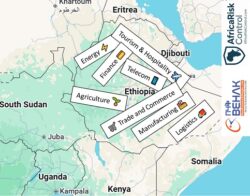
By AfricaRiskControl Team – Ethiopia, with a population exceeding 125 million and a rapidly urbanizing society, is emerging as a critical hub for trade and commerce in East Africa. Its strategic location, bordering Eritrea, Djibouti, Sudan, South Sudan, Kenya, and Somalia, positions it as a gateway for regional trade.
Over the past decade, the Ethiopian government has prioritized infrastructure projects, such as the expansion of dry ports, industrial parks, and transport corridors, aimed at boosting trade efficiency and reducing logistics bottlenecks. These initiatives, combined with a growing middle class, rising consumer demand, and government-led industrialization, create a fertile ground for both domestic and foreign investors seeking opportunities in the trade and commerce sector.
However, despite these opportunities, the sector faces challenges ranging from regulatory complexity and currency volatility to supply chain inefficiencies. Understanding the dynamics of Ethiopia’s trade ecosystem is essential for investors seeking to navigate risks and capture growth potential.
1. Key Investment Opportunities
a. Retail and Consumer Goods Distribution
The retail market in Ethiopia is largely underdeveloped, with traditional markets dominating over organized retail. Modern retail chains are expanding slowly, offering significant growth potential for investors who can introduce efficient distribution systems. Key segments include fast-moving consumer goods (FMCG), electronics, apparel, and household items. E-commerce is also nascent but growing, particularly in urban centers like Addis Ababa, creating opportunities for investors to build logistics networks, online marketplaces, and last-mile delivery services.
• Thinking of Investing in African countries?
- Through our network of investigative and business journalists in 32 plus African countries, we provide verified, boots-on-the-ground insights to help investors make confident decisions.
- Trusted by international investors and NGOs for our on-the-ground intelligence.
b. Import and Export Facilitation
Ethiopia’s trade is heavily import-dependent for machinery, fuel, and consumer goods while exporting primarily agricultural products, textiles, and leather. Investors can find opportunities in import/export trading companies, logistics service providers, and customs clearance agencies. Strategic engagement with dry ports and regional corridors can reduce operational costs and improve margins for import-export businesses.
c. Wholesale and Distribution Hubs
The establishment of centralized wholesale and distribution hubs remains limited outside Addis Ababa. Investors can capitalize on this gap by developing regional distribution centers that serve smaller towns and emerging urban areas. These hubs can enhance supply chain efficiency, reduce stock-outs, and create economies of scale for both local and international brands.
d. Trade Finance and Payment Solutions
Limited access to trade finance is a barrier for small and medium-sized enterprises (SMEs) engaged in commerce. There is an opportunity for investors to provide trade credit, supply chain financing, and innovative payment platforms that facilitate domestic and cross-border transactions. Digital payment solutions are particularly promising, given the increasing adoption of mobile money platforms in Ethiopia.
e. Sector-Specific Value Chains
Certain value chains, such as agro-processing, textiles, and consumer electronics, offer specific trade opportunities. Investors can participate by integrating vertically—sourcing raw materials, facilitating distribution, and developing retail channels—to capture value at multiple points in the trade chain.
2. Risks & Challenges
a. Regulatory and Bureaucratic Hurdles
Investors in trade and commerce face complex regulations related to import/export licensing, foreign currency controls, taxation, and trade permits. Delays in approvals and inconsistent enforcement can affect operational efficiency.
b. Currency Volatility and Forex Shortages
The Ethiopian birr has faced significant volatility, and access to foreign currency for imports is tightly regulated. This affects pricing, cash flow management, and long-term contracts for trade businesses.
c. Infrastructure Constraints
While major projects like the Addis Ababa–Djibouti railway are improving transport, many roads, warehouses, and distribution networks remain underdeveloped, especially in regional towns. Poor logistics can increase costs and delivery times.
d. Market Fragmentation and Informal Trade
The trade sector is highly fragmented, with a large informal market that competes with formal businesses. This can impact market share, pricing, and brand penetration for organized retail and distribution networks.
• Thinking of Investing in African countries?
- Through our network of investigative and business journalists in 32 plus African countries, we provide verified, boots-on-the-ground insights to help investors make confident decisions.
- Trusted by international investors and NGOs for our on-the-ground intelligence.
e. Political and Social Risks
Regional conflicts, civil unrest, and policy changes can disrupt supply chains and market access. Political risk mitigation is crucial for foreign investors to safeguard assets and operations.
3. Risk Mitigation Strategies
Regulatory Compliance & Local Partnerships: Engaging experienced local partners or legal advisors can streamline licensing and compliance processes.
Currency Hedging & Local Sourcing: Using forward contracts, local procurement, and partial local manufacturing can reduce exposure to foreign currency volatility.
Investing in Logistics & Infrastructure: Developing warehouses, distribution hubs, and last-mile delivery systems can mitigate infrastructure constraints and improve operational efficiency.
Market Research & Consumer Insights: Understanding local consumer behavior and informal market dynamics can help tailor product offerings and pricing strategies.
Political Risk Insurance: Investors should consider coverage against expropriation, civil unrest, and other geopolitical risks, particularly for cross-border trade operations.
In conclusion, Ethiopia’s Trade & Commerce sector presents a unique combination of growth potential and operational challenges. With strategic planning, local partnerships, and investment in infrastructure and technology, investors can capitalize on a market that is gradually transitioning from informal to organized trade. By understanding both the opportunities and the inherent risks, investors can position themselves to benefit from Ethiopia’s expanding consumer base and growing regional trade integration.
EDITOR’S NOTE: Africa Risk Control (ARC) is launched by award winning business & investigative journalist and due diligence expert Andualem Sisay Gessesse and his colleagues in different African countries to help global investors, corporations, and institutions make confident decisions in Africa’s dynamic markets.
Powered by a network of investigative and business journalists in 32+ African countries, ARC is a pan African due diligence and Risk Advisory service provider. With boots on the ground, ARC uncover realities beyond desk research — from hidden ownership structures to political exposure, regulatory shifts, and reputational risks.