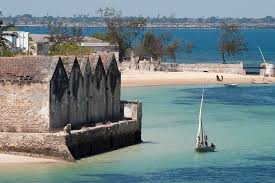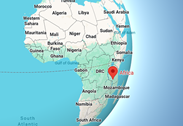


Mozambique rarely dominates African investment headlines, yet heading into 2026 it has become one of Southern Africa’s most consequential—and misunderstood—markets. Beneath the surface of LNG optimism, donor engagement, and infrastructure ambition lies a risk environment shaped by security geography, fiscal pressure, and execution bottlenecks that many external actors continue to underestimate.
At a national level, Mozambique appears politically stable. FRELIMO’s dominance remains intact, elections have not disrupted continuity, and the state retains international support. However, this headline stability masks an operating reality where predictability varies sharply by region, sector, and timing. For investors and operators, the challenge is no longer whether Mozambique is “open for business,” but where, when, and under what conditions projects can realistically proceed.
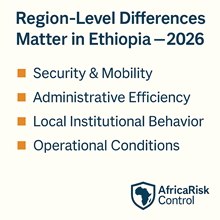
Security dynamics illustrate this disconnect. While much attention remains fixed on the Cabo Delgado insurgency, risk in Mozambique is not uniformly distributed. Some corridors and provinces remain commercially viable, while others present layered exposure that affects logistics, staffing, and project timelines. Treating Mozambique as a single risk environment has already led to costly miscalculations.
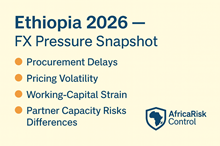
Economic pressure adds another layer. FX access delays, banking liquidity constraints, and donor-driven fiscal discipline increasingly influence enforcement behavior, procurement timelines, and payment reliability. These pressures rarely appear in policy statements, yet they directly affect day-to-day operations—particularly for foreign firms unfamiliar with how fiscal stress translates into administrative action.
Land access and community dynamics further complicate execution. Formal land-use rights (DUATs) are necessary but not sufficient. Projects most often face disruption after visibility increases, when employment, compensation, or benefit distribution intensifies local expectations. In this environment, social license is not secured once—it must be actively maintained.
Recognizing these realities, Africa Risk Control (ARC) has released “Mozambique 2026: Executive Executive Intelligence Brief”, a focused intelligence brief designed to help decision-makers distinguish real opportunity from overstated narratives. The report examines political power dynamics, security geography, FX risk, land exposure, sector viability, and the most common causes of project failure—without relying on promotional assumptions.
For investors, development partners, and policy actors assessing Mozambique in 2026, the question is no longer whether risk exists—but whether it is properly understood before commitments are made.
For in-depth picture, you can get ARC’s Mozambique 2026: Executive Intelligence Brief here.
Or read ARC’s Executive Risk Snapshot here.
Africa Risk Control (ARC) is launched by a group of award winning business & investigative journalist and due diligence experts in Africa to help global investors, corporations, and institutions make confident decisions in Africa’s dynamic markets.