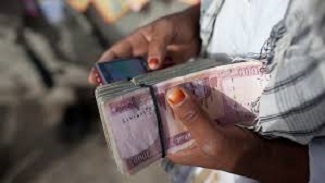


The National Bank of Ethiopia (NBE), financial sector governing body of the country, says digital financial transaction has been growing fast reaching 18.5 trillion Birr in one year (June 2024 -June 2025).
In its report released today NBE stated that the amount is double compared the previous year. It also stated that the growth of digital finance has expanded financial accessibility, the report indicated that technology infrastructure must be strengthened to prevent risks associated with cyberattacks and fraud.
NBE’s 3rd Financial Stability Report, which assessed the safety and stability of the financial system, also noted that Ethiopia’s financial system has demonstrated stability, successfully withstanding the impacts of global economic slowdowns and geopolitical tensions.
“A stress test conducted at the end of last June confirmed that Ethiopian banks possess the capacity to withstand any type of sudden economic fluctuations. It was observed that the fiscal year saw improvements in economic growth and a decrease in inflation, creating a stable operating environment for financial institutions,” the report stated.
“The banking sector remains robust and low-risk in terms of strengthening capital, maintaining loan quality, and increasing profitability. The performance of the microfinance, insurance, and capital goods finance sectors also showed improvement compared to the previous year. For the 2025/26 (2018 EFY) budget year, inflation is expected to drop to single digits, and the report predicts that foreign exchange earnings will grow.” the report stated.
Banking Sector of Ethiopia
Total banks loans of al commercial banks in Ethiopia and bonds reached ETB 3 trillion at the end of June 2025, rising 38.6 percent, from the ETB 2.2 trillion recorded the previous year. Similarly, total deposits surged 40.7 percent to ETB 3.5 trillion at the end of June 30, 2025, from ETB 2.5 trillion a year earlier. This reflects the existence of significant loan and deposit expansion, and growth in the banks’ core business.
As of June 30th, 2025, the total assets of commercial banks accelerated to over ETB 4.7 trillion from ETB 3.3 trillion at the end of June 2024, exhibiting a 44.5 percent steady growth and demonstrating fast growth of the banking sector as a whole. Total loans accounted for 64.1 percent and deposits at 74.1 percent of the total banking sector assets at the end of the review period, according to the NBE’s report.
Overall Financial Sector Performance
The report also indicated that total assets of the financial sector, including the social security sector, reached ETB 5.6 trillion at the end of June 2025, rising 40 percent from ETB 4 trillion at the same time a year earlier. Total financial sector assets accounted for 37.2 percent of GDP at the end of June 2025 compared to 34.6 percent of GDP by June 2024, reflecting higher asset growth of financial sector.
“During the fiscal year under review, the banking sector continued to account for the financial system’s largest market share, with 87.5 percent, followed by the social security sector (9.4 percent). This indicates that social security sector, which invests 80 percent of its assets in Treasury Bills, plays a significant role in stabilizing the liquidity risk in the financial sector, and the economy at large,” it said.
Ethiopia’s Debt
The report also stated that while domestic debt and the budget deficit have decreased, external debt reached 26.9 percent of GDP by the end of June 2025. “In response to the depreciation of the Birr the highest over the previous year witnessing a higher external indebtedness risk. On the other hand, the ratio of domestic debt to GDP decreased from 19.2 percent in 2024 to 14.8 percent in 2025 reflecting lower domestic indebtedness risk. Likewise, the budget deficit narrowed from 2.1 percent of GDP in 2024 to 0.4 percent in June 2025, because of improvements in revenue growth and implementation of the fiscal consolidation strategy,” the report stated.